Trezor Login – Accessing Your Crypto Vault Securely
A complete guide to logging into your Trezor wallet safely, understanding its layers of protection, and managing your crypto assets without compromising security.
🔍 Introduction: The Essence of Trezor Login
Trezor login is the first gate you pass to access your secure crypto world. It’s not an ordinary username-password system but a sophisticated physical verification process that guarantees ownership and safety. Unlike web wallets or exchange logins, Trezor ensures your private keys never leave your device, meaning hackers cannot remotely breach your funds.
As more users seek independence from centralized platforms, hardware wallets like Trezor have become the backbone of crypto self-custody. Logging into your Trezor is more than just gaining access—it's about reinforcing your role as the true owner of your assets.
🌱 Quick Overview
Trezor Login enables you to connect your Trezor hardware wallet to the official Trezor Suite platform, letting you securely manage Bitcoin, Ethereum, and hundreds of other cryptocurrencies—all while keeping your private keys offline.
🧠 How Trezor Login Works
Trezor devices operate on the principle of cold storage. When you initiate a login, the Trezor device communicates securely with the Trezor Suite app through a cryptographic handshake. Every action—whether verifying an address or confirming a transaction—requires physical approval from your device, ensuring no unauthorized access.
The login flow relies on three essential elements:
- PIN Authentication: You set a PIN that acts as your personal key to access the device.
- Device Verification: Each login session requires you to confirm the connection on your physical device.
- Encryption Layers: All data exchanged between Trezor and the Suite app is encrypted end-to-end.
🧭 Step-by-Step: Logging into Your Trezor Wallet
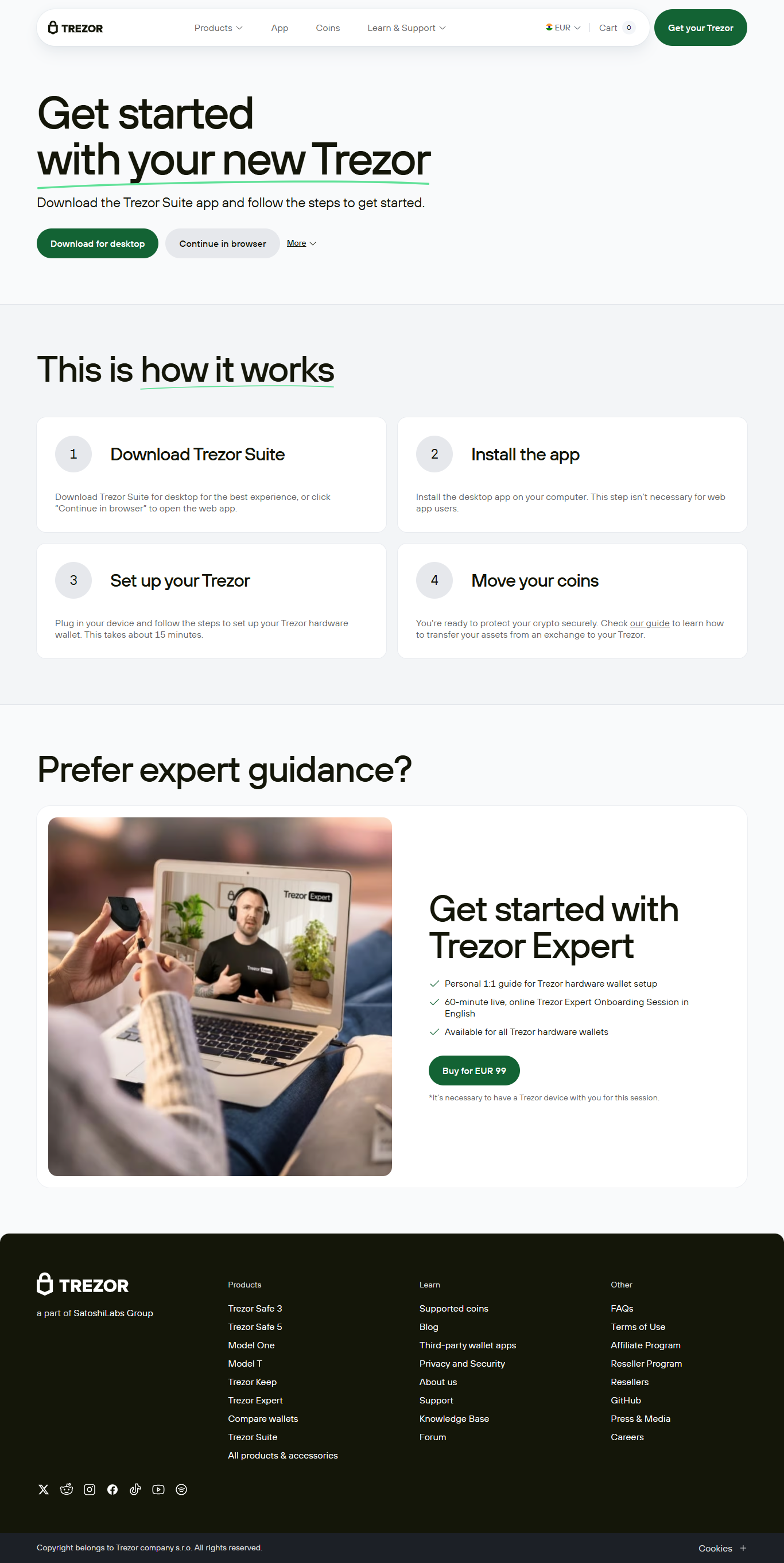
- Connect Your Device: Plug your Trezor Model One or Model T into your computer or mobile device using the provided USB cable.
- Open Trezor Suite: Launch the Trezor Suite desktop app or access the web interface through a verified secure URL.
- Device Confirmation: Your device will prompt you to verify the connection—always check for the authentic Trezor logo and request details.
- Enter Your PIN: Use the randomized matrix shown on-screen to enter your PIN. This prevents keylogging attacks.
- Access Dashboard: Once confirmed, you’ll enter your dashboard where you can view balances, send or receive crypto, and manage security settings.
🛡️ Why Trezor Login is Safer Than Conventional Logins
Most platforms rely on passwords or two-factor authentication, which can be intercepted or hacked. Trezor’s login system operates differently—it removes human error and online vulnerability altogether. Since your private key is generated and stored inside the hardware wallet, it never interacts directly with your computer or the internet.
This makes Trezor’s login system phishing-resistant and immune to most online attacks. Even if your computer were infected with malware, your crypto assets would remain untouchable.
📊 Comparison: Trezor vs Other Login Methods
| Feature | Trezor Login | Software Wallet Login | Exchange Account Login |
|---|---|---|---|
| Private Key Exposure | Never Exposed | Stored on Device | Held by Exchange |
| Authentication Type | PIN + Hardware Confirmation | Password + 2FA | Email + 2FA |
| Phishing Resistance | Very High | Moderate | Low |
| Device Dependency | Required | Optional | No |
⚡ Common Login Issues and Solutions
Even the most secure systems encounter occasional hiccups. Here are a few common problems users face during Trezor login and how to resolve them:
- Device Not Detected: Try switching USB ports, updating Trezor Suite, or reinstalling drivers.
- Wrong PIN Attempts: Repeated wrong PINs will trigger time delays for security—verify carefully.
- Firmware Issues: Keep your device firmware updated for compatibility with the latest Suite version.
- Browser Conflicts: Use Trezor Suite Desktop to avoid browser-based connection interruptions.
💬 FAQ – Frequently Asked Questions
Q1: Can I log in to Trezor from my phone?
Yes, Trezor supports mobile connectivity with select Android devices via OTG cables and the Trezor Suite Mobile App.
Q2: What happens if I forget my PIN?
You can reset your device using your 12–24 word recovery seed. Without the seed, your funds cannot be recovered.
Q3: Is Trezor login anonymous?
Yes. Trezor does not store user identities or IP addresses, keeping your usage completely private.
Q4: Can someone hack my Trezor remotely?
No. Physical access is required to perform any operation, making remote hacking nearly impossible.
🚀 Final Thoughts: Take Control with Trezor Login
The Trezor login process represents a paradigm shift in digital security—putting control back in the user’s hands. Instead of trusting centralized systems, you rely on cryptographic proof, physical confirmation, and open-source transparency. Every login is a reminder that your crypto belongs solely to you.
Secure. Private. Empowered. That’s Trezor Login.